

A threat actor is selling the Chegg[.]com data allegedly on an underground market. According to claims made on underground forums, the exposed information may include sensitive records belonging to multiple million-level records. At the time of writing, the authenticity and completeness of the leaked data remain unverified. However, the incident highlights the growing risk of data breaches, cybercrime, and unauthorized access to sensitive information across organizations worldwide.
Table of Contents
Incident Overview
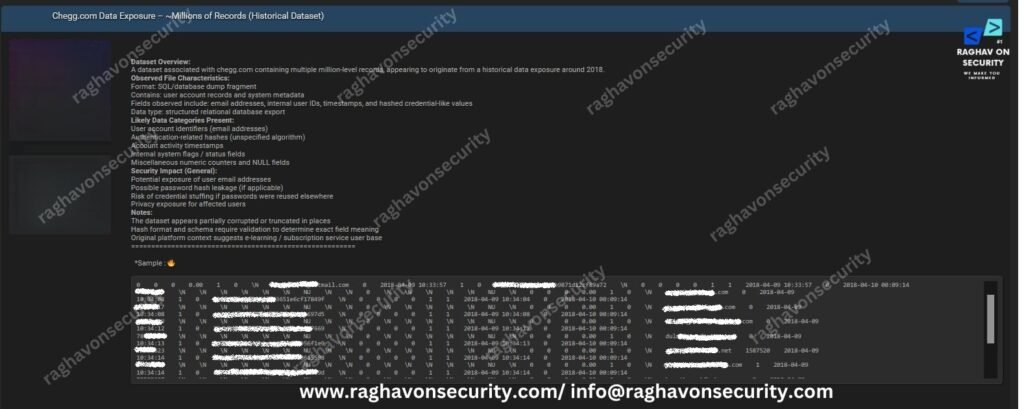
According to information shared by the threat actor, the leaked database allegedly contains data across various categories. The exposed records may include personally identifiable information (PII), contact details, account information, business records, or other sensitive data. The exposed file appears to be an SQL/database dump fragment. The dataset contains user account records along with system-related metadata.
Chegg[.]com Data Exposure
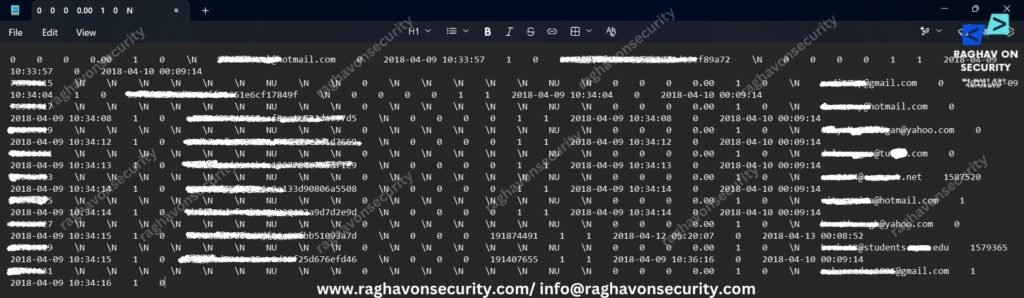
Observed fields include
- Email addresses.
- Internal user identifiers (User IDs).
- Account creation and activity timestamps.
- Hashed credential-like values.
- The data is structured in a relational database export format.
Likely Data Categories Exposed
- User account identifiers, including email addresses.
- Authentication-related hash values (hashing algorithm not identified).
- Account activity and system-generated timestamps.
- Internal status indicators and system flags.
- Various numeric counters, configuration values, and NULL entries.
Potential Security Risks
- Exposure of user email addresses could increase the risk of phishing and spam campaigns.
- Authentication-related hash values may present a security concern if they can be cracked or misused.
- Users who reuse passwords across multiple services could be vulnerable to credential stuffing attacks.
- The leaked information may result in privacy and data protection concerns for affected individuals.
- Threat actors could leverage the exposed data for social engineering and account takeover attempts.
Potential Risks Associated with the Data Leak
If the leaked information is genuine, affected individuals and organizations could face several cybersecurity risks, including:
- Identity theft and fraud
- Phishing attacks targeting exposed users
- Account takeover attempts
- Social engineering campaigns
- Credential stuffing attacks
- Financial fraud and unauthorized transactions
- Business email compromise (BEC) attacks
- Reputation damage and loss of customer trust
Growing Data Breach Concerns Across Global Markets
- Cybercriminals frequently use leaked databases to launch targeted attacks against victims. Even when passwords are not exposed, attackers can combine leaked information with publicly available data to create convincing phishing campaigns.
- As cyber threats continue to evolve, organizations face increasing pressure to strengthen their cybersecurity posture and protect customer information from malicious actors. Data leaks have become one of the most common forms of cyber incidents, affecting businesses, government entities, healthcare providers, financial institutions, and technology companies.
- The increasing number of cybersecurity incidents demonstrates why data protection has become a major concern for organizations worldwide.
- In India, businesses are facing an increasing number of ransomware attacks, phishing campaigns, and data breaches targeting customer databases and enterprise networks. As digital transformation accelerates, cybersecurity in India remains a critical focus area for both public and private sector organizations.
- Organizations in the United States continue to experience sophisticated cyberattacks aimed at financial, healthcare, retail, and technology sectors. Data breach investigations and threat intelligence monitoring have become essential components of modern cybersecurity programs across the US market.
- The UAE has emerged as a major technology and business hub, making cybersecurity in the UAE a strategic priority. Companies operating in the region are increasingly investing in cyber risk management, incident response, and threat detection capabilities to defend against emerging threats.
- Meanwhile, organizations across the United Kingdom continue to strengthen their cybersecurity frameworks to address evolving risks associated with data leaks, ransomware operations, and supply chain attacks. UK businesses are increasingly adopting proactive security measures to improve resilience against cyber threats.
How to Prevent Your Data From Being Leaked
While no organization can eliminate cyber risk, individuals can take several steps to reduce their exposure to data breaches and cyberattacks:
- Use strong, unique passwords for every online account.
- Enable multi-factor authentication (MFA) wherever possible.
- Regularly monitor accounts for suspicious activity.
- Avoid clicking on suspicious links or attachments in emails and messages.
- Update operating systems, applications, and security software promptly.
- Use a reputable password manager to generate and store credentials securely.
- Review privacy settings on social media platforms and limit publicly available personal information.
- Change passwords immediately if a service you use reports a security incident.
- Verify website authenticity before entering sensitive information.
- Stay informed about emerging cybersecurity threats and data breach notifications.
Conclusion
While the authenticity of the alleged leaked database remains under investigation, the incident serves as another reminder of the growing cybersecurity challenges facing organizations worldwide. Threat actors continue to target businesses of all sizes, seeking to monetize stolen information through data leak forums, cybercrime marketplaces, and underground communities.
Organizations should treat every reported data breach seriously and proactively assess their exposure, review security controls, and strengthen incident response capabilities. Businesses operating in India are increasingly investing in cybersecurity solutions to defend against ransomware attacks, phishing campaigns, and data theft. Similarly, organizations across the United States continue to prioritize threat intelligence, data breach investigations, and cyber risk management to combat evolving threats.
In the UAE, cybersecurity resilience remains a strategic focus as digital transformation accelerates across industries. Meanwhile, organizations in the United Kingdom are enhancing security frameworks and adopting proactive defense strategies to mitigate the risks associated with data breaches and cyberattacks.
As additional information becomes available, affected individuals and organizations should closely monitor official updates, remain vigilant against phishing attempts, and follow cybersecurity best practices to reduce potential risks. In today’s threat landscape, strong data protection, continuous monitoring, and cybersecurity awareness remain essential for safeguarding sensitive information against unauthorized access and cybercriminal activity.