
Table of Contents
Introduction
An anonymous group has leaked highly sensitive financial records belonging to Kafene, a fintech company headquartered in New York City, on a dark web forum.
Cybersecurity researchers and threat intelligence teams actively monitoring underground criminal activity first identified the leak on a deep web forum and immediately flagged it. The anonymous group has made the stolen records freely accessible to anyone, requiring no payment or authentication to download.
Alarmingly, the group claims to have stolen more than half a million records, consequently exposing sensitive customer financial data, personally identifiable information, and internal business credentials belonging to individuals and organizations across New York and the broader United States.
Moreover, this development is sending shockwaves through the entire US fintech sector. It is especially alarming because fintech companies store some of the most sensitive combinations of personal and financial data of any industry, specifically including banking credentials, investment records, payment histories, and government-issued identification details.
Should authorities confirm this incident, it would rank among the most serious fintech sector data breaches to hit New York and the United States in 2026, delivering far-reaching consequences for affected customers, investors, and regulatory bodies.
What Was Leaked?
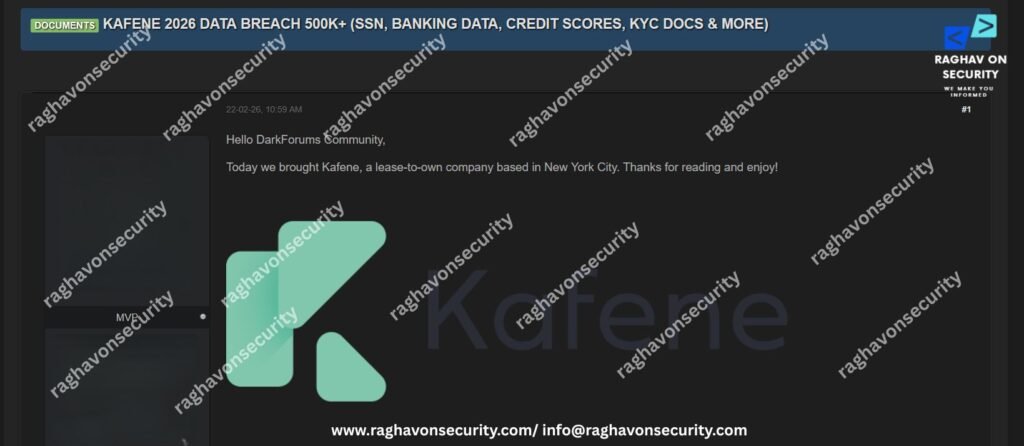
The anonymous group publicly posted the alleged dataset on a deep web forum actively monitored by global threat intelligence platforms and cybersecurity research teams.
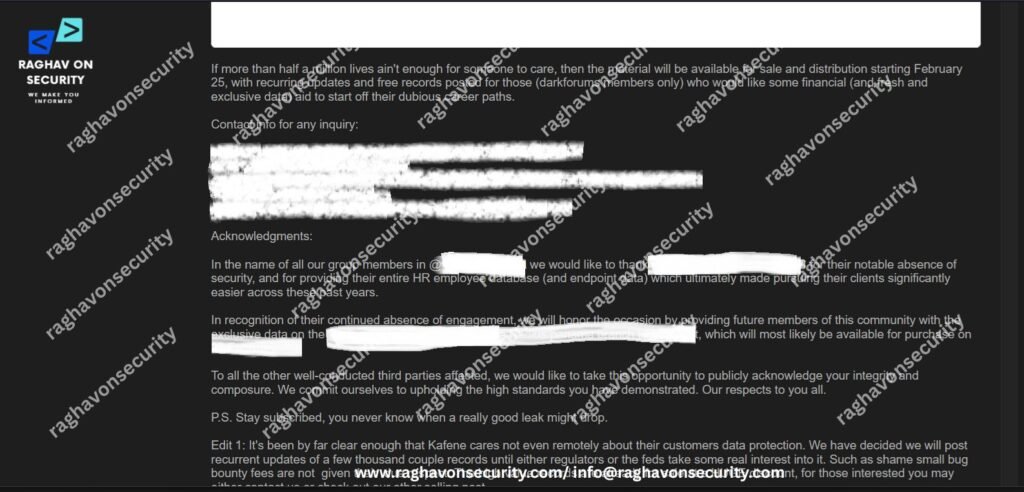
Dataset Overview
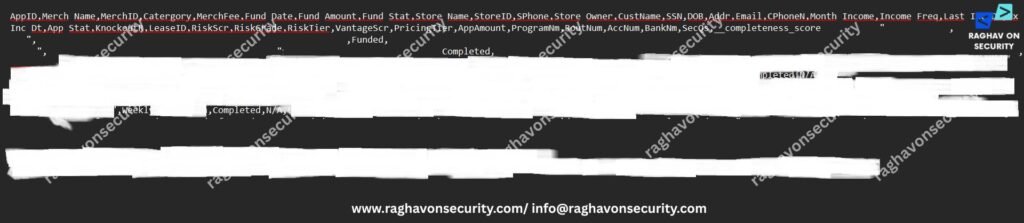
- Region – New York, United States
- Category – Fintech Company Customer and Financial Records
- Total Records – More than half a million
- Access Type – Freely Available – No Payment Required
- Customer full names and contact information
- Banking account details and routing numbers
- Payment transaction histories and records
- Social Security Numbers and government identification data
- Investment portfolio details and financial account credentials
- Internal API keys and authentication tokens
- Employee login credentials and system access details
Who Is Behind This Leak?
The group responsible for this leak identifies itself as an anonymous collective operating across deep web forums and underground criminal communities. Anonymous groups that freely publish stolen fintech data without ransom demands typically operate with one of the following motivations:
- Financial Disruption – deliberately destabilizing trust in digital financial platforms.
- Ideological Activism – publicly targeting financial institutions as symbolic acts.
- Underground Credibility Building – demonstrating capability to the criminal community.
- Secondary Exploitation Enablement – making data freely available for other criminals to monetize.
Who Is Affected?
This alleged breach directly impacts customers and business partners operating across New York and the United States. Fintech companies serve an extraordinarily diverse customer base. A breach of this nature could expose:
- Individual retail customers using the platform for personal banking or payments.
- Small business owners managing financial operations through the platform.
- Corporate clients with enterprise financial management accounts.
- Investment account holders whose portfolio details may be compromised.
- Employees and contractors whose internal credentials appear in the leaked dataset.
- Third-party vendors and partners connected to the affected financial infrastructure.
Why is New York Fintech Data Extremely Valuable on the Deep Web?
New York sits at the absolute center of the global financial system. Fintech companies operating from New York handle billions of dollars in transactions daily and serve customers across every US state and internationally. This makes New York fintech data exceptionally valuable to cybercriminals for several specific reasons:
- High Account Balances – New York financial customers typically maintain higher average account values.
- Business Account Access – Corporate financial credentials enable large-scale fraudulent transactions.
- Investment Data – Portfolio details reveal high-net-worth individuals as premium targets.
- Regulatory Complexity – Multiple overlapping US financial regulations create compliance pressure that attackers exploit.
- Interconnected Systems – New York fintech platforms actively connect and operate across major banking networks, payment processors, and investment platforms, all at the same time.
Stolen fintech credentials from New York-based platforms therefore provide criminals with access to significantly higher-value financial targets than typical data breaches. Stolen Fintech Data Enables Multiple Forms of Financial Fraud. Cybercriminals who obtain fintech customer records can launch numerous simultaneous fraud operations. These include:
- Account Takeover Attacks – using stolen credentials to hijack customer financial accounts directly.
- Wire Transfer Fraud – initiating unauthorized transfers using exposed banking credentials.
- Identity Theft – combining Social Security Numbers with financial data for comprehensive fraud.
- Investment Fraud – manipulating or liquidating exposed investment accounts without authorization.
- Synthetic Identity Creation – combining real and fabricated data to open new fraudulent financial accounts.
- Business Email Compromise (BEC) – targeting corporate clients using leaked business financial details.
- Tax Fraud – filing fraudulent tax returns using stolen Social Security Numbers and financial records.
- Credit Application Fraud – opening new credit lines using verified stolen identity information.
Regulatory and Legal Implications for New York and the US
This alleged breach carries serious regulatory and legal consequences under multiple US federal and New York state frameworks. Affected organizations must immediately consider:
- Gramm-Leach-Bliley Act (GLBA) – Financial institutions are required under GLBA to protect customer financial information. A breach of this nature may trigger a mandatory FTC investigation and significant financial penalties for inadequate data protection practices.
- New York Department of Financial Services (NYDFS) Cybersecurity Regulation – Under 23 NYCRR 500, New York’s strict financial sector cybersecurity regulation, covered entities must notify the NYDFS within 72 hours of discovering a cybersecurity event. Non-compliance carries severe financial and operational penalties.
- SEC Cybersecurity Disclosure Rules – If Kafene is a publicly traded company or serves publicly traded clients, it must promptly report material cybersecurity incidents to comply with SEC disclosure obligations.
- Federal Trade Commission (FTC) Act – The FTC actively investigates data breaches involving consumer financial information and can pursue enforcement action against organizations that fail to maintain adequate security standards.
- New York SHIELD Act – Under the Stop Hacks and Improve Electronic Data Security (SHIELD) Act, New York businesses must notify affected residents of data breaches involving private information without unreasonable delay.
What Should Affected Customers Do Right Now?
If you believe your financial data may have been compromised in this breach, take these immediate protective steps:
- Change your passwords immediately on all accounts associated with Kafene.
- Enable multi-factor authentication on every linked financial and email account.
- Contact your bank immediately to flag potential unauthorized access to linked accounts.
- Place a fraud alert with all three major credit bureaus, Equifax, Experian, and TransUnion.
- Consider a credit freeze to prevent new fraudulent accounts from being opened in your name.
- Monitor all financial accounts closely for unauthorized transactions or suspicious activity.
- Check your Social Security Number exposure at IdentityTheft.gov, operated by the FTC.
- Report the incident to the FBI Internet Crime Complaint Center at ic3.gov.
- File a complaint with the Consumer Financial Protection Bureau (CFPB) if you suffer financial harm.
- Consult a legal professional if you experience financial losses resulting from this breach.
What Do Cybersecurity Experts Say?
Cybersecurity professionals consistently warn that anonymous groups targeting financial institutions pose critical threats, and organizations must act immediately. They should never wait for official confirmation to arrive first. Researchers have identified three primary dangers that follow every fintech data dump of this nature:
- Immediate account takeover by criminal actors who download and exploit credentials within hours.
- Secondary fraud campaigns were launched against individuals whose financial details appeared in the leak.
- Long-term identity exploitation that may not surface for months or years after the initial exposure.
Furthermore, the anonymous group released this data completely freely, rather than selling it for profit. This choice strongly suggests they are driven by motivations that go well beyond simple financial gain. As a result, free data releases typically maximize criminal exploitation by distributing stolen records to the widest possible audience all at once.. Organizations and financial institutions in New York and across the United States that discover their data appearing on deep web forums should immediately:
- Activate their incident response and business continuity plans.
- Notify the NYDFS, FTC, and FBI Cyber Division without delay.
- Engage forensic cybersecurity specialists to determine the full scope of the breach.
- Communicate transparently and promptly with all affected customers.
- Consult legal counsel regarding all applicable federal and state compliance obligations.
Conclusion
The anonymous group leak of Kafene fintech company records represents a serious and urgent cybersecurity incident demanding immediate attention from affected customers, financial regulators, and law enforcement authorities across New York and the United States.
Fintech companies are trusted with the financial lives of their customers. When cybercriminals break that trust through targeted cyberattacks, credential exposure, or infrastructure misconfiguration, consequently, the financial damage can devastate affected individuals for years.
No fintech company operating in New York or across the US should consider itself immune from the growing threat of anonymous group data exposure operations in 2026.
Staying informed, responding decisively, and maintaining strong personal and organizational cybersecurity practices remain the most powerful defenses available in today’s rapidly evolving criminal threat landscape.